
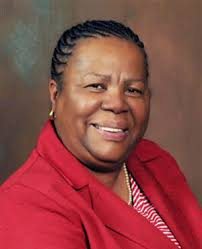
Grace Naledi Mandisa Pandor Biography: Age, Education, Husband, Net Worth & More

Few politicians anywhere in the world can claim a career as layered as Grace Naledi Mandisa Pandor’s. Born into one of South Africa’s most significant anti-apartheid families, shaped by exile and international education, and eventually rising to become one of the most recognizable faces of post-apartheid governance, Pandor has served her country across multiple cabinet portfolios spanning nearly three decades. She is not just a politician — she is a product of the liberation struggle and a bridge between South Africa’s turbulent past and its aspirations for the future.
Grace Naledi Mandisa Pandor Biography
| Full Name | Grace Naledi Mandisa Pandor |
| Date of Birth | December 7, 1953 |
| Place of Birth | Durban, South Africa |
| Nationality | South African |
| Occupation | Politician, Educator, Academic |
| Party | African National Congress (ANC) |
| Education | BA (University of Botswana); MA (University of London); MA Linguistics (Stellenbosch); PhD (University of Pretoria, 2019) |
| Known For | Minister of International Relations; Education reform; ICJ case against Israel (2023) |
Early Life and the Weight of Heritage
Naledi Pandor was born on December 7, 1953, in Durban, into a family that carried enormous weight in South African intellectual and political history. Her grandfather, Z.K. Matthews — Zachariah Keodirelang Matthews — was a titan: a respected academic, lawyer, social anthropologist, and anti-apartheid activist whose students included Nelson Mandela and Seretse Khama, the future presidents of South Africa and Botswana respectively. Her father, Joe Matthews, was himself an ANC activist.
This heritage was not merely symbolic. It meant that Pandor’s childhood was shaped by the realities of political resistance and, from 1961, exile. She spent her formative years outside South Africa, receiving what would become a distinctly international education across Botswana, the United Kingdom, and elsewhere. She matriculated at Gaborone Secondary School in Botswana in 1972.
Education
Pandor’s academic credentials are genuinely impressive, and they span decades. She earned a BA in History and English from the University of Botswana in 1977. She then traveled to the United Kingdom, where she obtained a Master of Arts from the University of London. Later, in 1997 while already serving as a Member of Parliament, she added a second MA — this time in Linguistics — from Stellenbosch University in South Africa.
In 2019, at the age of 65, Pandor completed a PhD from the University of Pretoria, an act that powerfully reinforced what she had long preached about the value of lifelong learning. She has also received honorary doctorates from several institutions, including the Cape Peninsula University of Technology, the University of Stellenbosch, the University of Lisbon in Portugal, and University College Dublin in Ireland.
Career in Public Service
Pandor began her professional life as a teacher. She taught English at Ernest Bevin School in London in 1980, then in Gaborone, Botswana (1981–1984), before lecturing at Taung College of Education in the North West province. She later became a senior lecturer in English at the University of Bophuthatswana (now North-West University) and then at the University of Cape Town, where she served in the Academic Support Programme until 1994.
Following South Africa’s historic first democratic election in 1994, Pandor was elected to Parliament as an ANC member — a position she has held ever since. She quickly rose through the ranks: Deputy Chief Whip of the ANC caucus (1995–1998), Deputy Chairperson of the National Council of Provinces (1998), and Chairperson from 1999 to 2004.
Her cabinet career reads like a tour through South Africa’s most complex policy domains. She served as Minister of Education (2004–2009), Minister of Science and Technology (2009–2012 and again 2014–2018), Minister of Home Affairs (2012–2014), Minister of Higher Education (2018–2019), and most prominently as Minister of International Relations and Cooperation from 2019 to 2024. In the latter role, she became one of Africa’s most recognizable diplomatic voices, steering South Africa’s foreign policy through the complex terrain of the Russia-Ukraine conflict, the BRICS alliance, and the 2023 ICJ case against Israel for alleged genocide in Gaza — a decision that drew global attention.
After the 2024 elections, Pandor transitioned to the chairmanship of the Nelson Mandela Foundation, where her influence continues to shape conversations around justice and reconciliation.
Contributions and Legacy
Pandor holds the distinction of being the first woman Chancellor of the Cape Technikon, which later merged to form the Cape Peninsula University of Technology. Across her cabinet tenures, she was consistently associated with efforts to reform apartheid-era education systems, expand scientific research and innovation capacity, and project a principled, independent voice on global affairs.
Personal Life
Naledi Pandor is married and has maintained a relatively private family life despite decades in the public spotlight. Her personal philosophy — rooted in her family’s tradition of intellectual seriousness and public service — is evident both in her policy choices and in the relentless commitment to her own education that saw her earn a doctorate in her mid-sixties.
Net Worth
Pandor’s net worth has not been publicly confirmed. As a career public servant, her income has derived primarily from government salaries and related institutional stipends over nearly three decades in public office.
Conclusion
Grace Naledi Mandisa Pandor is one of the most enduring figures in post-apartheid South African public life. Born into the struggle, formed by exile and international learning, and tested across multiple government portfolios, she has embodied a particular ideal: that public service is not a career, but a calling. Her decision to earn a doctorate at 65 is perhaps the most personal statement she has ever made about who she is.
Frequently Asked Questions
Q: What is Naledi Pandor known for?
A: She is known for serving in multiple South African cabinet posts, particularly as Minister of International Relations and Cooperation, and for leading South Africa’s ICJ case against Israel in 2023.
Q: Who was Naledi Pandor’s grandfather?
A: Z.K. Matthews, an influential ANC academic and activist whose students included Nelson Mandela and Seretse Khama.
Q: When was Naledi Pandor born?
A: December 7, 1953, in Durban, South Africa.
Q: What academic degrees does Naledi Pandor hold?
A: She holds a BA from the University of Botswana, two Master’s degrees (University of London and Stellenbosch), and a PhD from the University of Pretoria (2019).
Q: Is Naledi Pandor still in politics?
A: After the 2024 elections, she transitioned to the chairmanship of the Nelson Mandela Foundation.
Editorial Notice
The biography above is compiled from publicly available sources and is intended for general informational purposes only. At PeopleCabal, we are committed to accuracy — however, public records evolve, and some details may change over time. If you notice anything that requires a correction or update, we welcome you to reach out to us directly.
